Back to courses

BSc (Hons) Midwifery

BSc (Hons) Full-time 3 years

Midwifery is a deeply rewarding profession centered on building compassionate, evidence-based partnerships with women, birthing people, and their families.


Midwifery is a deeply rewarding profession centered on building compassionate, evidence-based partnerships with women, birthing people, and their families.


Award
BSc (Hons)
Start date(s)
13 September 2027
UCAS Code
B720
Course specifications
Course length
Full-time (3 years)
Campus location
University: Walsall Campus
UCAS points calculator

Why choose this course?

NMC Accredited Registration: Graduate fully qualified and eligible to register as a practicing midwife with the Nursing and Midwifery Council

NMC

Dedicated Professional Midwifery Advocates: Access expert pastoral care, clinical advocacy, and academic mentorship embedded directly into your degree.

Active, Student-Centred Learning: Build practical skills through a spiral curriculum that continuously expands your clinical confidence and decision-making abilities.

Balanced Theory & Placement Split: Alternate between academic simulation workshops at university and hands-on clinical placements in real maternity care environments.

£5,000+ Annual NHS Training Grant: Eligible UK students can receive non-repayable financial support of at least £5,000 per year via the NHS Learning Support Fund.

Free Equivalency Tests: Take advantage of free online English and Maths equivalency assessments provided by the university if you do not hold standard Level 2 qualifications.

What's unique about this course?

At the University of Wolverhampton, our course philosophy puts you at the very heart of your learning journey from day one.

What sets us apart is our strong support system and personalized approach. You are assigned a Professional Midwifery Advocate (PMA) - a specialist role designed to nurture your professional identity, mental wellbeing, and clinical confidence throughout your studies.

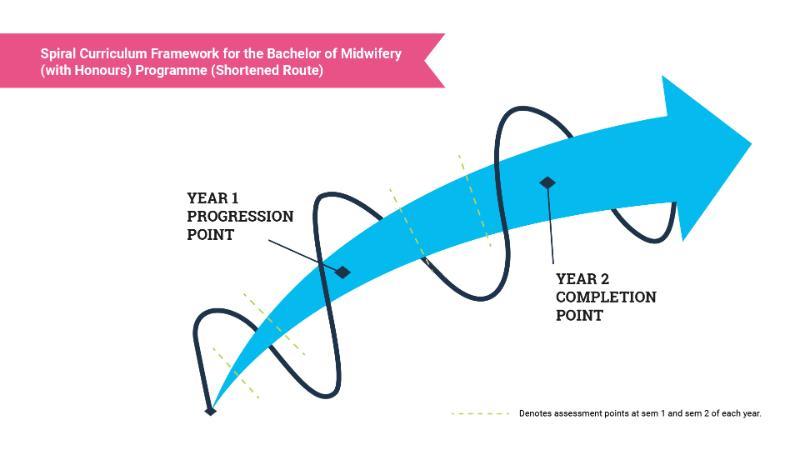
We use a spiral curriculum structure, introducing foundational concepts early on and revisiting them with increasing clinical complexity. Coupled with active simulation, skills workshops, and low-risk formative assessments, you are given a safe space to practice, receive feedback, and learn without penalty before stepping into live clinical environments.

  • 96% of students were satisfied with teaching on their course (NSS, 2025)
  • 95% of students were satisfied with the academic support on their course (NSS, 2025)
  • 95% of students were satisfied with the learning resources (NSS, 2025)
  • 95% of students were satisfied with how their course recognised the student voice (NSS, 2025)

What happens on the course?

This three-year full-time degree combines classroom teaching, online virtual learning environments, and hands-on clinical placements.

Year 1: Foundational Science & Midwifery Skills

Your first year focuses on establishing academic success, understanding fundamental body systems, and developing basic clinical care:

Succeeding in Academic and Clinical Practice (30 Credits): Build fundamental academic, research, digital, and professional skills designed to transition you into university study.

Physiology and Practice in Pregnancy (30 Credits): Study maternal, fetal, and early neonatal anatomy and physiology, learning how to perform basic health assessments.

Professionalism, Public Health and the Midwife (30 Credits): Explore the midwife’s role in public health, health promotion, reducing inequalities, and maintaining NMC professional standards.

Supporting Childbirth and Adaptation to Parenthood (30 Credits): Gain knowledge in holistic care during labor, birth, and the immediate postnatal transition to parenthood.

Year 2: Complex Care & Population Health

Your second year expands into managing additional care needs, evaluating evidence, and making complex decisions:

Developing Clinical Practice (30 Credits): Apply core clinical skills during supervised practice placements while documenting your professional growth.

Evidence-Based Midwifery and Professional Development (30 Credits): Critically evaluate health research to ensure your practice remains grounded in current clinical evidence.

Midwifery and Population Health (30 Credits): Examine global health priorities, social determinants of health, and inclusive practices across diverse communities.

Care of the Childbearing Woman with Additional Needs (30 Credits): Develop clinical interventions for complex medical, surgical, or psychosocial maternity conditions.

Year 3: Advanced Leadership & Autonomous Practice

Your final year consolidates your clinical proficiency, emergency response, and leadership capabilities:

Consolidating Clinical Practice (30 Credits): Master autonomous care delivery and complete all required NMC proficiency competencies.

Urgent and Emergency Care of the Mother and Neonate (30 Credits): Train in high-fidelity simulation environments to manage obstetric and neonatal emergencies confidently.

Supervision and Leadership in Midwifery Practice (30 Credits): Prepare to lead multidisciplinary maternity teams, mentor junior colleagues, and coordinate service improvements.

Midwifery Research and Innovation (30 Credits): Complete an in-depth research project in a specialist area of midwifery practice that matches your career ambitions.

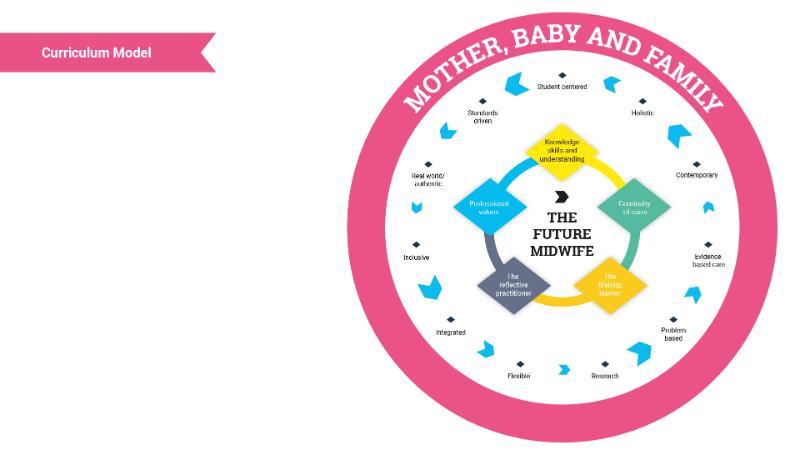
Midwifery Curriculum Model

Midwifery Two Year Spiral Curriculum Framework


Placements on the course

Placements are a key part of your midwifery course, and you'll be fully prepared before you start. Practice-based learning is integrated throughout all three years, giving you real-world experience in maternity care alongside your theory modules.

Getting ready for placement
Before each placement, you'll attend preparation sessions and simulation workshops to build your confidence, along with pre-placement briefings covering professional expectations and safety.

While you're on placement
You'll be supported throughout by:

  • Practice supervisors and practice assessors, who support your clinical learning and assessment
  • Academic assessors, university staff who guide your practice learning journey
  • Professional Midwifery Advocates, who offer expert guidance and advocacy throughout the programme

You'll reflect on your experiences through structured activities, portfolio work and debrief sessions, helping you connect theory to practice.

Practice hours and progression
The course meets Nursing and Midwifery Council (NMC) requirements of 2,300 practice hours and 2,300 theory hours (1,800 hours for the shortened, two-year programme). You need to maintain at least 80% attendance and engagement across both theory and clinical practice to meet these requirements. There's no automatic right to a second attempt at any failed practice component, and no right to repeat a practice module if you fail any of its compulsory practice elements, in line with NMC standards.

Practical requirements

  • When you're asked for your choice of placement area, the University will try to meet your request, but this can't be guaranteed, so you'll need to be able to travel to wherever you're allocated
  • You'll need to complete an occupational health assessment and meet occupational health requirements
  • You'll need to keep vaccinations up to date before attending placement — the University runs a vaccination programme to support this
  • You'll need a satisfactory enhanced DBS check, free of charge once you've secured an offer

Employability on the course

Graduating from this course earns you a BSc (Hons) degree and direct eligibility to register with the NMC as a Registered Midwife.

Complete Regulatory Alignment: The curriculum is validated against the NMC Standards of Proficiency for Midwives (2019), ensuring you complete the required 2,300 theory and 2,300 clinical practice hours.

Diverse Career Pathways: Qualified midwives can work within NHS hospital trusts, community maternity teams, birth centers, private practice, or international healthcare organizations.

Specialist Advancement: Graduates can progress into specialist roles such as continuity of care leads, diabetes specialist midwives, bereavement care, research, clinical education, or maternity service management.

Career Development Support: Gain access to dedicated employability workshops covering CV writing, clinical interview preparation, and networking events.


Course Modules

Potential Career Paths

You will be prepared for the developing role of the midwife and be equipped with the tools to be integrated into a sustainable, reflective workforce. On successfully completing the course you will exit with both an academic award, Bachelor of Midwifery (Hons), and the professional NMC registration as a midwife. 

Once qualified, this will open up the prospect of many jobs in clinical practice, hospital or community settings, specialist clinical roles, research, education or managerial roles.   

Registered midwives (RM) can continue to study after they have qualified, often in a specialist area, as they develop their career path and can work abroad in many countries with their UK qualification. 

Additional Information

Everything you need to know about this course!

  • Dedicated Professional Midwifery Advocates (PMAs): Benefit from unique, structured advocacy and pastoral mentorship designed specifically for midwifery students.

  • Advanced Simulation Suites: Practice essential skills and emergency scenarios using realistic simulation technologies before entering hospital placements.

  • Student-Centred Extended Induction: Settle smoothly into higher education with extended induction sessions covering academic writing, digital platforms, and study strategies.

  • Student Voice Driving Change: Influence your own course through regular module evaluations and focus groups that directly shape teaching and assessment formats.

Want to find out more? 

Why not attend one of our Open Days, where you will have the opportunity to talk to staff and students who are currently studying and find out more about the course and our facilities? 

Twitter

Facebook

Upon completing your degree, you will demonstrate the key competencies required of a Registered Midwife:

  • Autonomous Midwifery Practice: Assume full professional accountability for delivering safe, holistic, and evidence-based care during pregnancy, birth, and postnatal periods.
  • Critical Thinking & Research: Analyse clinical research and healthcare policies to justify care decisions and drive improvements in maternity services.
  • Emergency Clinical Management: Recognize and manage complex maternity complications, neonatal care, and urgent obstetric emergencies within multidisciplinary teams.
  • Inclusive & Equitable Advocacy: Promote health equity, respect cultural diversity, and advocate for individual birthing choices across varied populations.
  • Professional Leadership & Resilience: Model professional behavior, support peer wellbeing, and adapt confidently to evolving healthcare environments


Location Mode Sep intake Fee Year
Home Full-time £9790 per year 2026-27
International Full-time £17600 per year 2026-27

Additional Course Costs

Mandatory Costs

  • International checks (INTCC) as part of the DBS are required and costs vary by country.
  • Uniform and ID badges are provided for this course, however the University of Wolverhampton reserves the right to charge for extra uniform should this be required.
  • You will be required to provide appropriate foot wear at a cost of approximately  £25-£40.

Further information on these additional costs will be provided prior to the start of your studies

The University is committed to a transparent fee structure, with no hidden costs, to help you make an informed decision. This includes information on what is included in the fee and how fees are calculated and reviewed.


If a tuition fee is not showing, we may not offer this intake for this course. Please check the start date information on the course finder for start dates.

You must have a minimum of three GCSEs at grade C/4+ or equivalent (e.g. Key Skills Level 2/ Learn Direct Level 2/ Functional Skills Level 2) in an English-based subject, Maths and Science    (Science subject could be Biology; Physics; Chemistry; Psychology; Sociology; Health and Social care)

Please note we do NOT accept GCSE Short Courses or GCSE Equivalence Tests from other institutions or organisation

 PLUS EITHER

  • 120 UCAS points 
  • A Levels: grades BBB including a Social Science or Science subject (eg:  Biology; Physics; Chemistry; Psychology, Health and Social Care, a Social Science or Sociology). Not including General Studies, Critical Thinking or Extended Project 
  • T Levels:  Equivalent to 120 UCAS points or higher in Health or Healthcare Science
  • BTEC Level 3 National Extended Diploma: at a DDM in a Health or Science subject
  • CACHE Level 3 Technical Extended / Extended Diploma:  at a B grade in a Health related subject 
  • Access to HE Diploma (60 credits):  of which a minimum of 45 must be at Level 3 (120 UCAS point equivalence, minimum 30 credits at distinction) in a Health or Science subject.   If applying with an Access course you only need GCSE Mathematics and English Language at grade C/4 or above or accepted equivalent. You are not required to hold three GCSEs in total and GCSE Science is not required
  • Undergraduate or Postgraduate Degrees (also required to hold a relevant Level 3 Science or Social Science qualification)
  • Foundation Degrees / HND / HNC (also required to hold a relevant Level 3 Science or Social Science qualification)

Use the UCAS Tariff calculator to check your qualifications and points

We will accept a mix of A levels and  BTEC etc. but these must be at the appropriate standard as stipulated on the webpage.

Applicants who hold an unrelated HNC, HND, Foundation Degree or Degree (BA, BSc, etc.) are also required to hold a relevant Level 3 Science or Social Science qualification.

Evidence of digital literacy and technological literacy capability will be determined by successful completion of your application.

If you've got other qualifications or relevant experience, please contact The Gateway for further advice before applying.

Please note:

Unfortunately we are not able to accept advanced entry onto this course.

Other Requirements

Applicants will also be required to provide satisfactory personal statement and reference (academic or employer).

Those meeting the entry requirements may be shortlisted for interview. 

Read further information regarding interview preparation

Previous Study

Please note we will not accept applicants onto our professional courses who have been unsuccessful on professional courses at other institutions of higher education

Additional Information

Good health and good character are fundamental to being a midwife, and consequently all midwifery students must have a Disclosure and Barring Service (DBS) Check. Professional courses are exempt from the Rehabilitation of Offenders Act 1974, and all previous convictions, cautions etc. must be declared. You will also require satisfactory health clearance. As students will undertake exposure-prone procedures as part of their training they will be required to have additional screening for HIV, Hepatitis B and Hepatitis C.

Free Disclosure and Barring Service (DBS) and Occupational Health Check:

Due to the professional nature of some of our courses you may also be required to complete a Declaration of Health and Disclosure and Barring Service (DBS) Check.  We will coordinate both of these non-academic conditions with you should your course require this and you receive an offer from us

There will be no cost for the DBS this is free to applicants who have secured an offer and have chosen to study at the University of Wolverhampton.

Placements

During the Midwifery course you will be required to attend placements.  When you are asked for your choice of placement area we will endeavour to meet your request however we must emphasise that this cannot be guaranteed and therefore you must ensure you are able to travel to the final placement area you are allocated.

New regulatory standards for midwives were approved by the Nursing and Midwifery Council in October 2019.  The "Future Midwife" standards of proficiency and education set out the knowledge, understanding and competencies that midwives must have in order to safely and effectively practice in the UK.  The University will be making changes to its midwifery programmes in light of the new standards and will be seeking approval from the NMC during 2020.  We anticipate that the new programmes will run from September 2020/21, subject to NMC approval.

Don't have GCSE English and/or Maths? Take our Equivalency Assessments

We understand that not everyone is able to achieve GCSE Maths and English for a variety of reasons. Our equivalency assessments provide an opportunity for you to further your English and/or Maths skills ready for your studies, as well as being able to meet part of the entry requirements for many of our undergraduate and postgraduate courses. Our online equivalency assessments are free of charge and accepted as the equivalent to a GCSE for the majority of our courses, however applicants of Initial Teacher Training courses will need to sit an on-campus equivalency test which costs £35. Find out more about our equivalency tests.

Student Visa Requirements:

Applicants who require a student visa to enter the UK are not eligible to be considered for this course. 

Skilled Worker Visa Requirements:

Applicants who are in the UK on a Skilled Worker Visa or are a dependent of a Skilled worker are not eligible to be considered for this course. 

“It is obvious that the lecturers put a lot of time and effort into teaching sessions in order to maximise our learning.” 

“The genuine support and feeling of wanting us to prosper from all the lecturers.” 

“I think the resources shared on canvas have really helped to aid with learning. The PowerPoints and additional/suggested reading has helped to guide learning.Online earning has helped a lot as it’s helped me have some semblance of a work/home life balance.” 

Nursing and Midwifery Council (NMC)

Recognised by the Nursing and Midwifery Council (NMC) for the purpose of registration as a qualified midwife.

Tuition Fees Loan (Home Fee Status):

By studying an undergraduate or postgraduate pre-registration programme you are eligible for a Tuition Fee loan. of up to £9,790. The loan will support your studies and enable you to start a rewarding career in healthcare.


Changes for EU students:

The UK government has confirmed that EU students starting courses from 1 August 2021 will normally be classified as Overseas (International) students for fee purposes. More information about the change is available at UKCISA:

EU citizens living in the UK with 'settled' status, and Irish nationals living in the UK or Ireland, will still be classified as Home students, providing they meet the usual residency requirements, for more information about EU Settlement Scheme (EUSS) .


NHS Learning Support Fund

All eligible nursing , midwifery and most allied health professionals' students on pre-registration courses will also receive a Training Grant of at least £5,000 per year that is not means-tested and will not have to be repaid.

An additional payment of up to £3,000 per academic year will be available to eligible students;

• £2,000 for students with children towards childcare costs

• £1,000 Special Subject Payment on certain shortage specialism courses

Among others, the shortage specialisms have been confirmed to include:

• Mental health nursing

• Learning disability nursing

• Podiatry

Please note that this additional NHS funding is not available for students on the Foundation Year of a 4-year degree


Additional funding:

The Learning Support Fund also offers students additional support while studying for their degree. This includes:

• Additional travel and accommodation costs to clinical placements over their normal daily travel costs

• An exceptional hardship fund of up to £3,000 per student per academic year


You can find more information on the NHS Business Services pages.

Telephone

01902 32 22 22

Email

enquiries@wlv.ac.uk

Online

Order a prospectus

How we compare

Find out how our course is rated on Discover Uni, the official website for comparing UK higher education courses.

Find out how our course is rated on Discover Uni, the official website for comparing UK higher education courses.

Full-time Course